
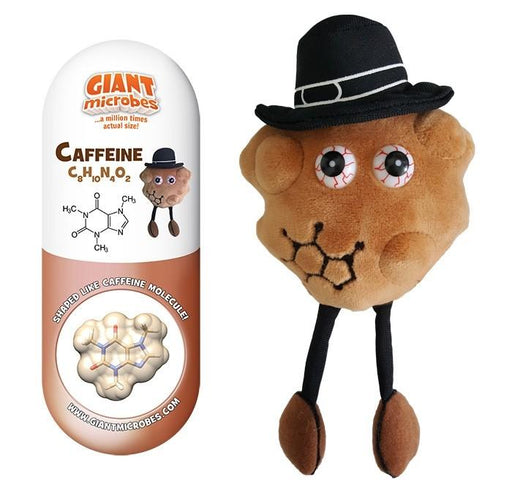
GIANTmicrobes® Neurotransmitter Molecule Plush Toy
SKU:
Caffeine, Dopamine or Serotonin Molecule Plushy!
Choose from the following assortment of GIANTmicrobes® Neurotransmitter Molecular Push Toys;
Caffeine Molecule Plushy (based on the shape of the actual caffeine molecule) is passionate about concocting stuff, just hip enough to have coffee bean feet!
Dopamine Molecule Plushy (based on the shape of the actual molecule) is a neurotransmitter that plays a role in pleasure, movement, motivation and cognition!
Serotonin Molecule Plushy (based on the shape of the actual molecule) is a neurotransmitter that plays a role in mood, memory, sleep and cognition!
Specifications
- Material: Plush from all new materials. Stuffed with polyester fiber fill.
- Care & Cleaning: Surface washable: sponge with water & soap, air dry.
- Size: Original size (approximately 6-8")
- Packaging: Each plush microbe includes a printed card with fun, educational and fascinating facts about the actual microbe or cell.
- Safety: Every product meets or exceeds U.S. and European standards for safety.
- Age Recommendation: For ages 3 and up
- Caffeine (SKU: HT-2041) Brown
- Dopamine (SKU: HT-2021) Yellow
- Serotonin (SKU: HT-2022) Blue
EACH SOLD SEPARATELY


Learn More About These Molecules
Caffeine Facts:
Caffeine is a naturally occurring stimulant found in over 60 different plant species from cocoa and coffee beans to cola nuts and tea leaves. With billions of cups of coffee, tea and soda consumed each year, the world is wired on caffeine. Early civilizations discovered that plants containing caffeine had stimulating effects. Some considered these plants as sacred. Massive trade in tea and coffee over the centuries led to the global demand for caffeine. Whether it is harmful, helpful, or both is a subject of great debate.
The benefits of caffeine include increased productivity and aid in memorizing and retrieving information. Caffeine may also reduce inflammation and help block the perception of pain. Some studies have shown that caffeine may slow memory decline in the elderly. The primary reason people consume caffeine is for its stimulating effects. On the negative side, caffeine can cause difficulty sleeping, jitters, increased heart rate, high blood pressure, anxiety and nausea. Many are willing to risk these negatives for increased wakefulness and alertness. But try to limit yourself to 400 mg of caffeine per day, or about two to three 8 oz. cups of coffee.
The caffeine molecule closely resembles a cellular molecule called adenosine, which signals the brain to slow the body down. Adenosine binds to neural receptors and reduces neuron activity, dilating blood vessels and making you feel sleepy. Due to its similar structure, caffeine blocks the adenosine receptors, essentially tricking your brain into thinking it is adenosine. The result is that caffeine speeds up the nerve cells and causes the brain’s blood vessels to constrict.
Caffeine can be addictive and its effects depend on your body size and your caffeine use. Daily coffee and tea drinkers have an altered neural chemistry. When you drink more caffeine your neurons grow more adenosine receptors, so it takes more caffeine to block the receptors and achieve the wakefulness effect. Because caffeine is addictive, if you cut back on it, you may go through withdrawal. It could take two weeks to kick the habit, which is the time it takes for the adenosine receptors to reset to baseline levels.
Dopamine Facts:
Dopamine is an essential neurotransmitter, a brain chemical that helps neurons communicate with each other and with other cells. Neurons are like mini computers, analyzing and coordinating everything happening at thousands of points of contact with other neurons. For every thought you have and action you take, dopamine and other neurotransmitters are zapping into the receptors that stud each of the thousands of dendrites on billions of neurons!
Dopamine plays a role in pleasure, movement, motivation and cognition. Activities that cause the release of dopamine include exercising, cooperating, having healthy relationships, and eating or even just anticipating eating sweet foods. Along with its main job of regulating and influencing thinking, dopamine also controls production and release of many hormones, such as those crucial for your response to stress.
Chronic stress or pain can deplete dopamine and decrease the sensitivity of neurons to stimulation. This may result in the inability to feel pleasure, a defining symptom of depression. Certain illicit drugs cause overproduction of dopamine. Such drugs can hijack your brain’s own pleasure-reward system. Other drugs work by neutralizing cells that normally reduce the production of dopamine.
Dopamine controls the information flow from one brain area to another and it is synthesized in many brain regions. One region helps initiate movement, so damage there can lead to Parkinson’s disease, characterized by the loss of muscle control. Another region regulates the release of the pituitary hormone. And yet another is about reward and, in that region, various pleasurable stimuli will activate neurons to release dopamine.
Serotonin Facts:
Serotonin is a neurotransmitter that influences your mood, memory, sleep and cognition. It can constrict blood vessels and regulate body temperature. Because serotonin helps control the stream of information moving across the pathways of the brain, it exerts a powerful effect on your thoughts and state of mind. Since 1921, when Otto Loewi first discovered neurochemical messengers, many different neurotransmitters have been identified. Serotonin and dopamine are two of the best known.
Nerve messages travel along neurons as tiny pulses of electricity. To cross the tiny gaps between neurons, the messages convert into a chemical form. In just a few thousandths of a second, molecules of serotonin jump the gap, attach to receptor sites of a receiving neuron and set off another nerve impulse. The biochemical mechanisms are complex since neurotransmitters may excite or inhibit a neuron from sending a signal.
High levels of serotonin can occur from certain medications, illegal drugs or dietary supplements. This is often called serotonin syndrome and can lead to shivering, diarrhea, muscle rigidity, fever and even seizures. Low levels of serotonin can cause irritability, aggression, depression and insomnia.
Serotonin also plays a key role in psychiatric disorders such as depression and anxiety. Antidepressants such as Prozac can boost serotonin levels by inhibiting the reabsorption (or reuptake) of serotonin, so it remains in the synapse longer and enhances its effect.
Certain activities may help boost serotonin levels such as smiling and exercise. Sunshine, foods containing tryptophan (such as eggs, tofu, salmon) and foods that fuel healthy gut bacteria are also a good way to stay positive about your serotonin.
Share this Product
You May Also Like

Similar Product Comparison
| Similar Products |

Egg Cell XL Size & Mini Magnetic Sper... |

Super Sick Day - GIANTmicrobes® Plush... |

Pneumonia (Streptococcus Pneumonia) -... |

Stomach Ache (Shigella) - GIANTmicrob... |

Bed Bug (Cimex lectularius) - GIANTmi... |
| Price | |||||
| SKU |
GMXL106
|
GMB114
|
GM556
|
GMK125
|
GMK102
|
| Description | |||||
| Availability |
In Stock
|
In Stock
|
In Stock
|
In Stock
|
In Stock
|
| Collection |
All
|
All
|
All
|
All
|
All
|
| Product Type |
Plush Toy
|
Plush Toy
|
Plush Toy
|
Plush Toy
|
Plush Toy
|
| Shipping Weight |
Weight not available |
Weight not available |
Weight not available |
Weight not available |
Weight not available |
| Sold By |
GIANTmicrobes
|
GIANTmicrobes
|
GIANTmicrobes
|
GIANTmicrobes
|
GIANTmicrobes
|